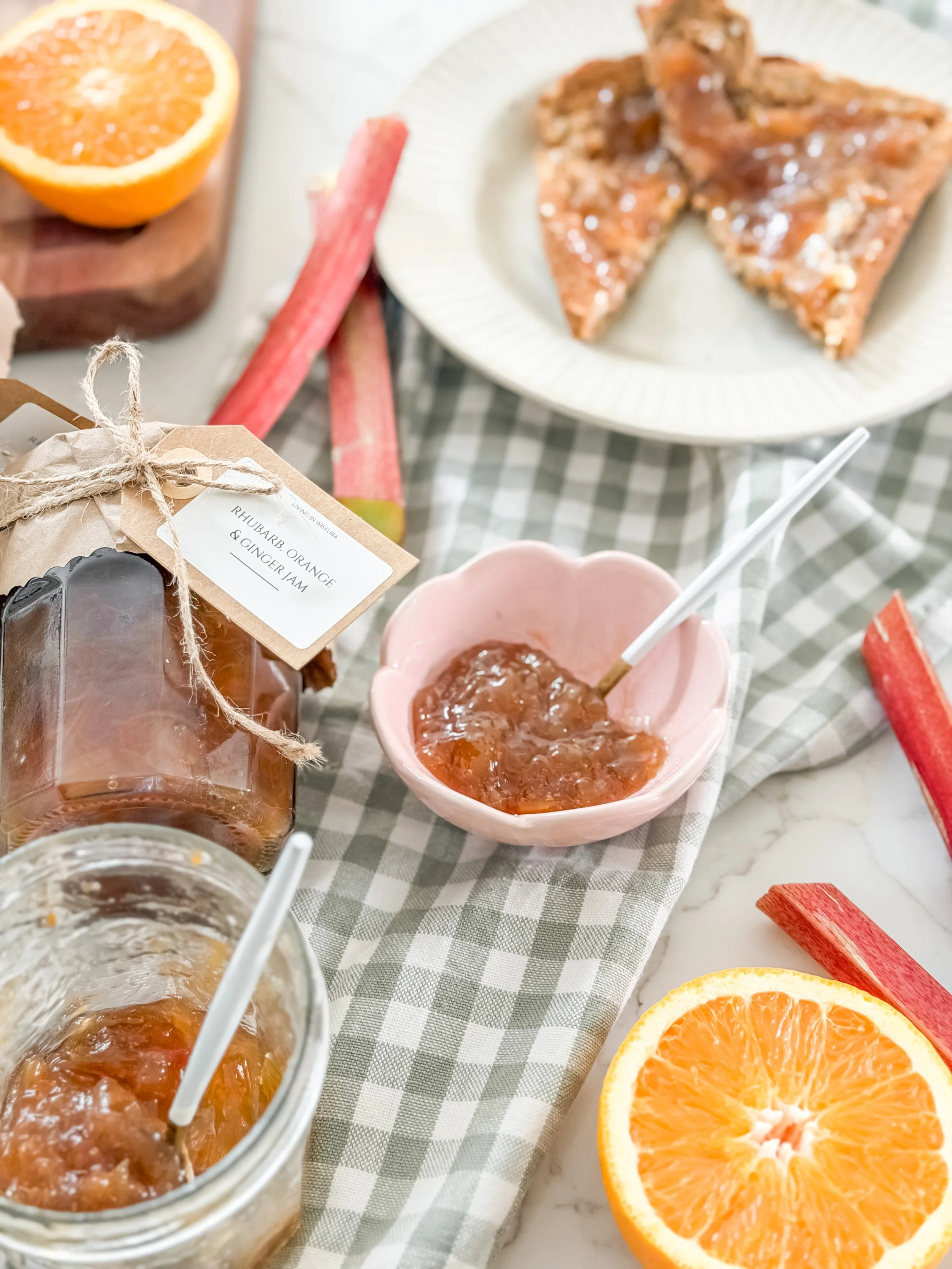
There’s something about this time of year that feels full of promise — the warmer days are on their way, the garden is starting to wake up, and everything feels just that little bit lighter. One of the very first signs of this for me is always that first crop of rhubarb.
I genuinely get excited when I see it coming through — those bright pink stalks are such a reminder that the growing season is beginning again. It’s the start of everything that’s to come in the garden, and I love finding ways to make the most of it.
We’ve been lucky enough to have a steady supply from the garden recently. And while I love using it in bakes, making jam felt like the perfect way to capture that fresh, seasonal flavour and enjoy it for a little longer.
This rhubarb, orange and ginger jam has quickly become a favourite in our house. It’s sweet but with that lovely sharpness from the rhubarb, lifted with citrus and finished with a gentle warmth from the ginger.
This rhubarb, orange and ginger jam has quickly become a favourite in our house. It’s sweet but with that lovely tang from the rhubarb, a hint of citrus from the orange, and just enough warmth from the ginger to make it feel a little bit special.
It’s simple to make, keeps beautifully, and is perfect spread over toast, spooned onto scones, or even swirled into yoghurt.
Key Ingredients in Rhubarb, Orange & Ginger Jam
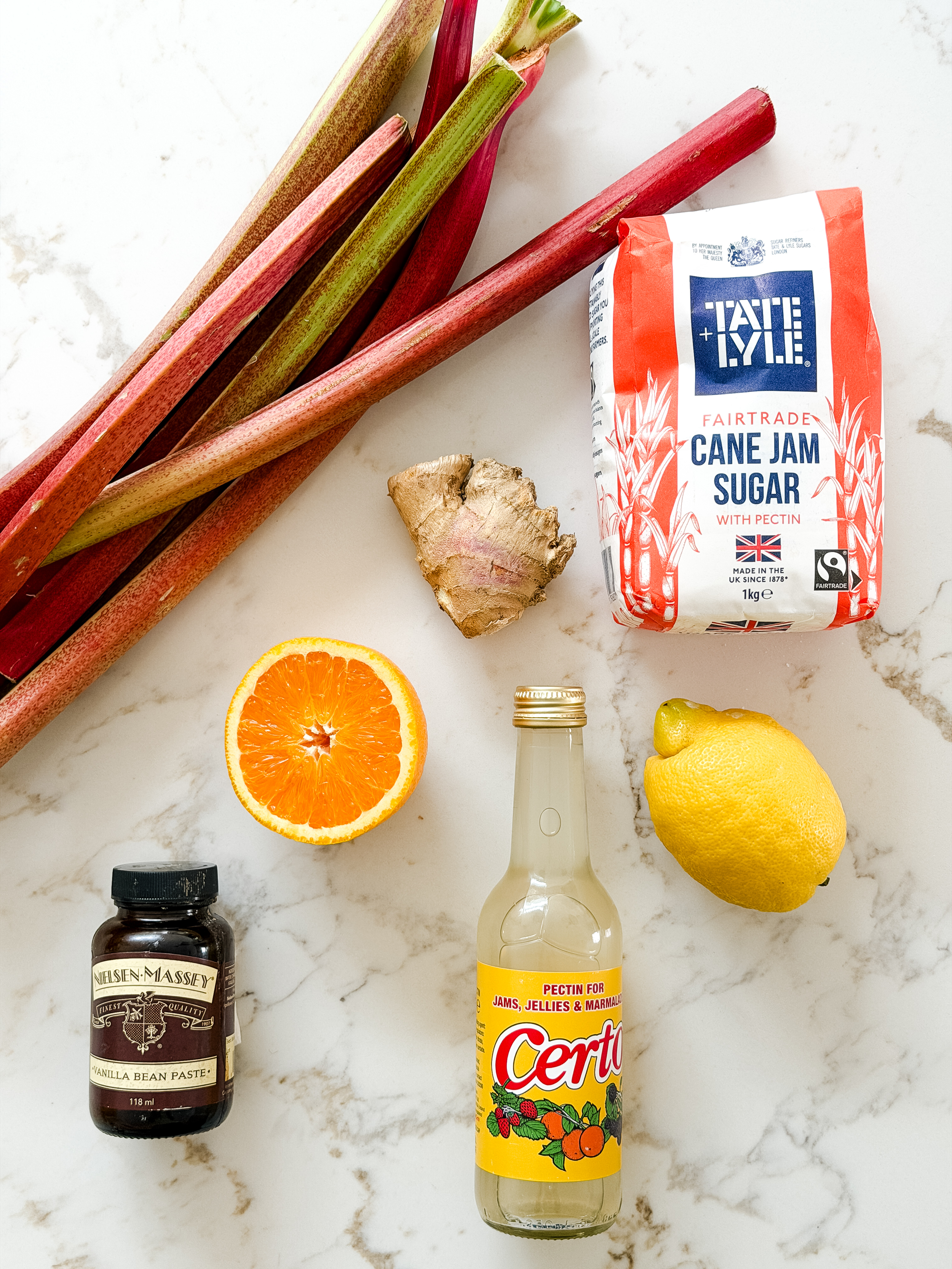
This is one of those recipes that uses just a handful of ingredients but creates something really special:
Rhubarb — The star of the show. Its natural sharpness is what gives this jam its character. Fresh, vibrant stalks work best.
Sugar — Essential for both sweetness and helping the jam set. I used cane jam sugar, which already contains pectin and makes the process much more reliable. It balances the tartness of the rhubarb beautifully and gives that lovely, classic jam texture.
Orange — Adds brightness and freshness. The zest and juice lift the flavour and give the jam a lovely citrus note.
Ginger — Just enough to add warmth and depth without overpowering. It pairs perfectly with the rhubarb and orange.
Lemon juice — I added the juice of one lemon, which might seem like a small detail but makes a real difference. The acidity helps the jam to set (especially important with rhubarb, which is low in pectin), and it also lifts the flavour, balancing the sweetness and bringing a lovely brightness to the finished jam.
Vanilla bean paste — Just a teaspoon of good-quality vanilla bean paste adds a gentle warmth and depth that works beautifully with the rhubarb and ginger. It softens the sharpness slightly and rounds everything out. You can also use the seeds from a vanilla pod if you prefer — it gives the same lovely flavour with those little specks of vanilla throughout.
Pectin (optional) — Rhubarb is naturally quite low in pectin, which means it doesn’t always set as easily as other fruits. I chose to add a little extra pectin towards the end of cooking, just to make sure I got a good set. You don’t always need it, especially if you’re using jam sugar, but it’s a helpful addition if you prefer a firmer, more traditional jam consistency.
A simple combination, but one that feels perfectly balanced — fresh, comforting, and just a little bit indulgent.
How to Make Rhubarb, Orange & Ginger Jam
This is such a rewarding recipe to make — simple, satisfying, and your kitchen will smell incredible.
1. Prepare the Rhubarb
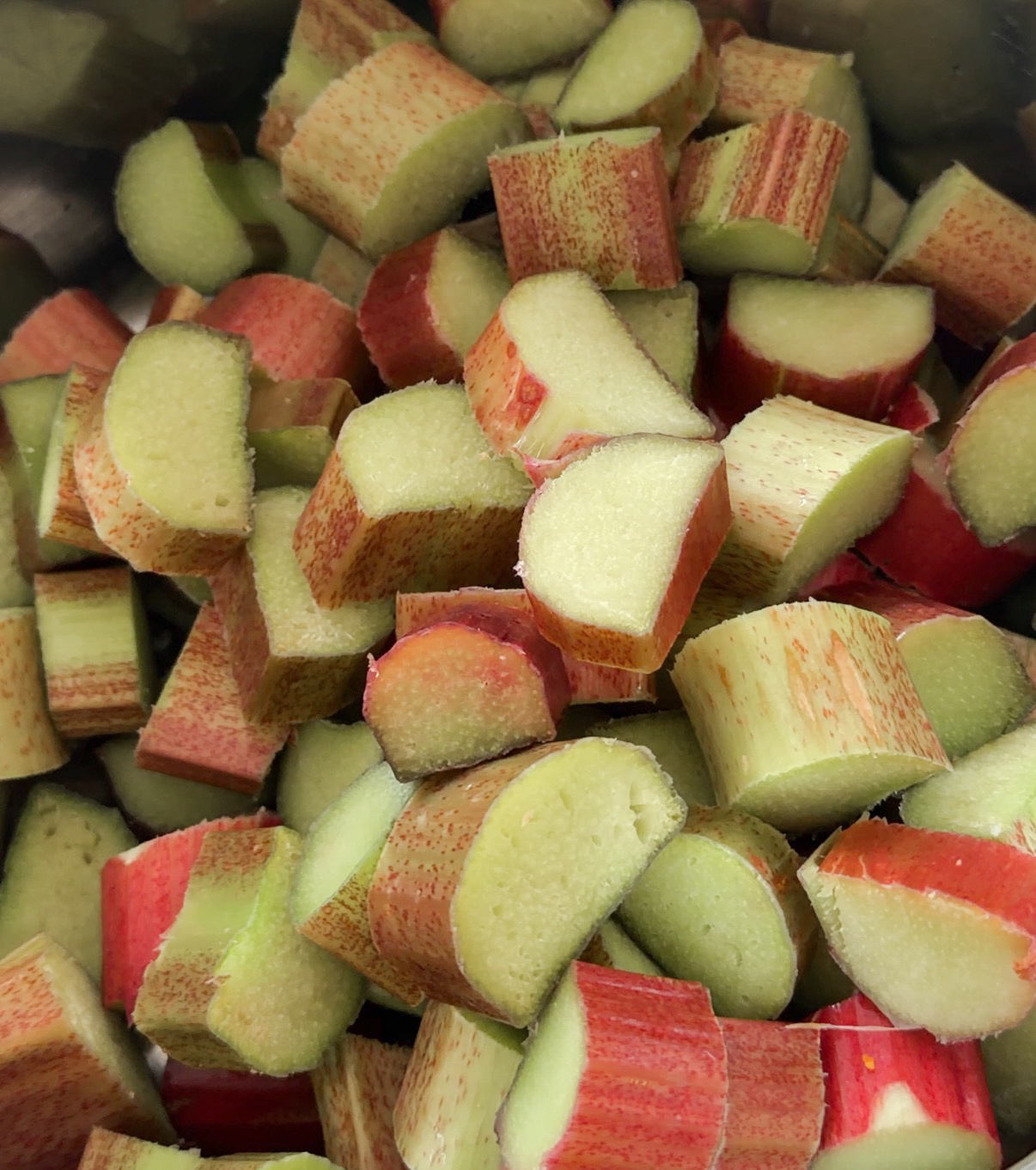
Wash and trim your rhubarb, then cut it into small pieces (around 2–3cm). Place it into a large saucepan.
At this stage, I also like to pop a small plate into the freezer — this will be used later to test whether the jam has reached its setting point. It’s a simple step but makes the whole process so much easier.
2. Add the flavour
Add the zest of the orange, then cut the orange into chunks, removing the pith and the tougher centre, and add those to the pan too. I like to include any juice left on the board as well — it all adds to that fresh, citrusy flavour.
Next, add the fresh grated ginger and give everything a gentle stir. This is where those first layers of flavour start to build.
3. Add the sugar and finish the flavour
Pour in the cane jam sugar and gently mix until the rhubarb is well coated. At this stage, add the lemon juice and vanilla bean paste, stirring everything together so it starts to form a lovely syrupy base.
If you have time, you can leave it to sit for a little while — this helps draw out the juices and gives you a better consistency when cooking.
If you’d like a slightly brighter, more citrusy finish, you can also add a little lemon zest here.
4. Cook the jam
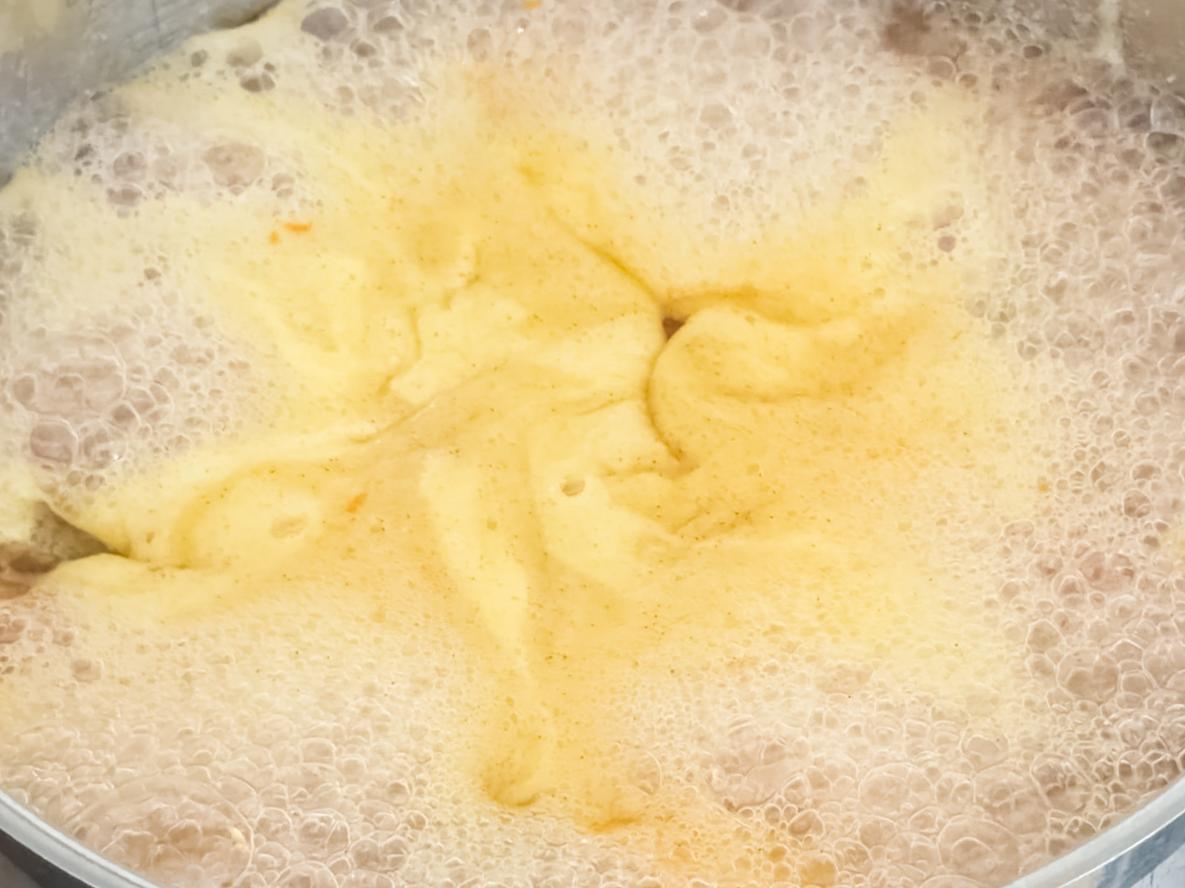
Bring the mixture to a gentle boil and let it bubble away for around 10 minutes, stirring occasionally. As it cooks, you may notice a little scum forming on the surface — just skim this off as you go. The fruit should soften down beautifully at this stage.
To check if it’s ready, spoon a small amount onto your chilled plate and leave it for a minute or two. Then gently push your finger through it — if the surface wrinkles slightly, it’s ready. If not, keep cooking in 2-minute intervals, testing again each time.
If you’re using a sugar thermometer, you’re looking for it to reach around 105°C.
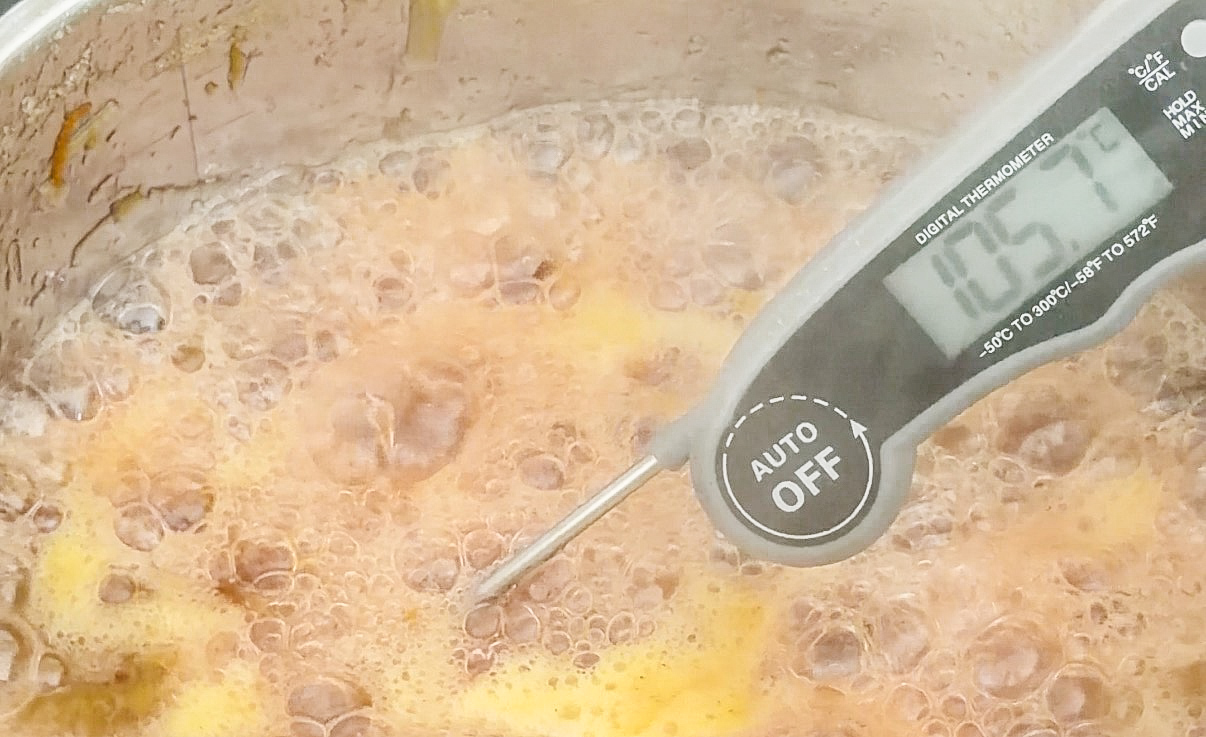
5. Check the setting point
Take your chilled plate out of the freezer and spoon a small amount of jam onto it. Leave it for a minute or two, then gently push it with your finger — if the surface wrinkles slightly, it’s ready.
If it’s still quite runny, return the pan to the heat and continue cooking in short intervals, testing again each time. If you’re unsure or prefer a firmer set, you can add 1–2 teaspoons of pectin at this stage — it will help the jam set more reliably, especially as rhubarb is naturally low in pectin.
6. Jar and store
Make sure your jars are clean, dry, and properly sterilised before you begin. I usually wash them well, then place them in the oven at around 140°C for 10–15 minutes to dry and sterilise.
Once your jam is ready, leave it to sit for about 20 minutes, then carefully pour it into the warm jars. Seal and allow to cool completely.
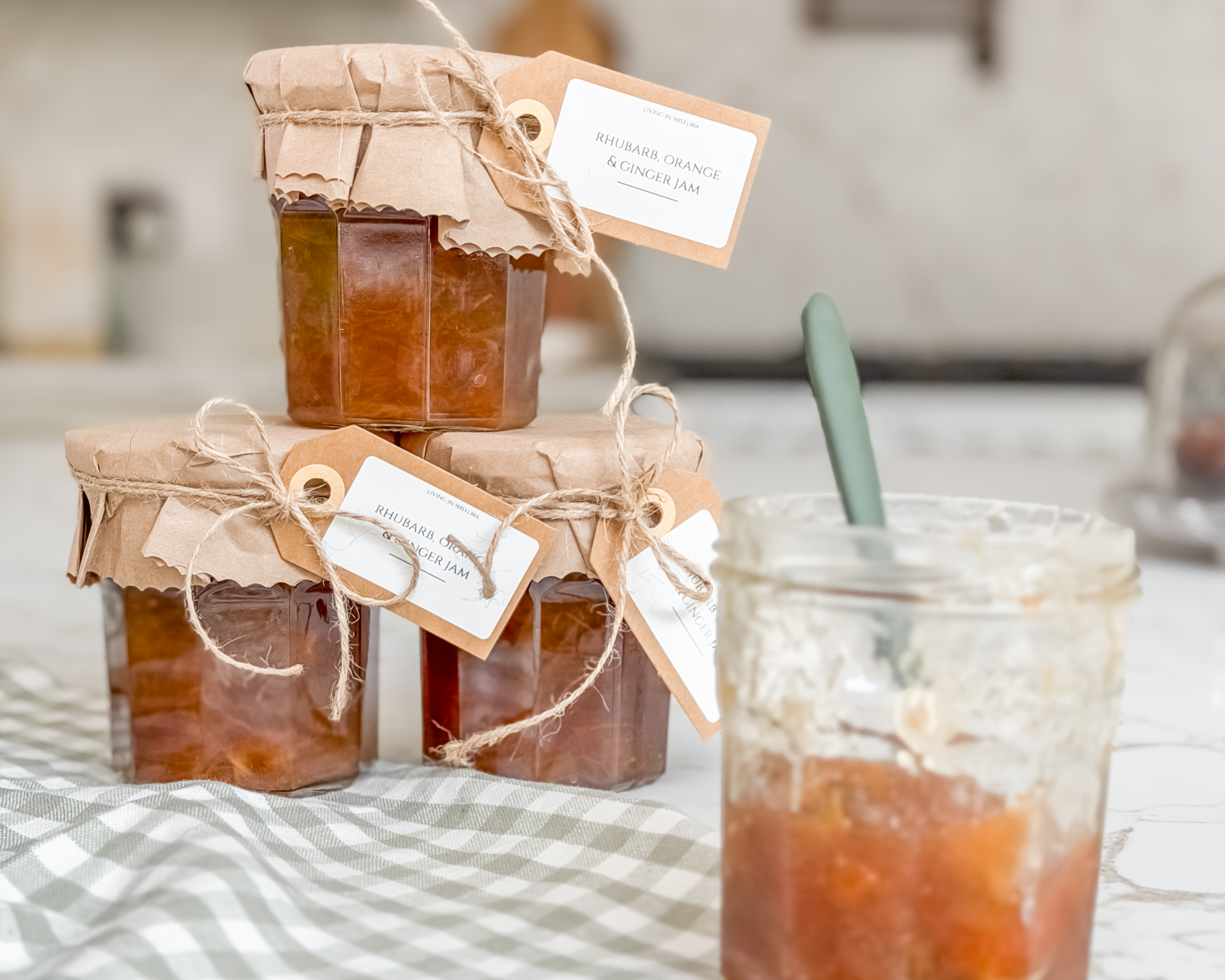
🥣 What to Serve with:
This jam is so versatile and works with so many simple, comforting things:
Warm buttered toast
Fresh scones with cream
Swirled into natural yoghurt
Spread over a sponge cake
Even as a topping for porridge on cooler mornings
It’s one of those little jars of goodness that makes everyday moments feel a bit more special.
Storage & freezing Tips
Store your jam in sterilised jars in a cool, dark place. Lasts for up to six months.
Once opened, keep it in the fridge and use within a few weeks (although it rarely lasts that long in our house!).
Yes — if you prefer, you can freeze the jam in suitable containers. Just allow it to cool completely first, then freeze for up to 3 months.
Wisteria recipes…
For me, recipes like this are what Living in Wisteria is all about — simple, seasonal food made with care, using what’s around us, and creating something to enjoy with family and friends.
There’s something really special about opening a jar of homemade jam, knowing exactly where it came from and how it was made. It’s those small, thoughtful moments that make a house feel like home.
You can download and print the recipe card below to keep in your kitchen — perfect for when the rhubarb starts growing again next year.
Rhubarb, Orange & Ginger Jam Recipe
Prep Time: 20 mins
Cook Time: 20-25 minutes
Serves: makes 3-4 jars
Ingredients
- 1kg rhubarb, washed and chopped into small pieces
- 750g cane jam sugar
- Zest and flesh of 1 orange (pith removed)
- Juice of 1 lemon
- 1 tsp vanilla bean paste (or seeds from 1 vanilla pod)
- 1–2 tsp fresh ginger, grated
- 1–2 tsp pectin (optional)
Instructions
- Wash and trim the rhubarb, then cut into small pieces (around 2–3cm) and place into a large saucepan. Pop a small plate into the freezer for testing the setting point later.
- Add the orange zest, then cut the orange into chunks, removing the pith and tougher centre. Add to the pan along with any juice. Stir in the freshly grated ginger.
- Pour in the cane jam sugar and gently mix until everything is well coated. Add the lemon juice and vanilla bean paste, stirring to combine. If you have time, leave it to sit for a little while to draw out the juices.
- Place the pan over a medium heat and stir until the sugar has completely dissolved.
- Bring to a gentle boil and cook for around 10 minutes, stirring occasionally and skimming off any scum from the surface.
- Take your chilled plate from the freezer and spoon a little jam onto it. After a minute or two, push it gently with your finger — if it wrinkles, it’s ready. If not, continue cooking in 2-minute intervals, testing again each time. If needed, add 1–2 teaspoons of pectin to help it set.
- Once ready, leave the jam to sit for around 20 minutes. Meanwhile, ensure your jars are clean, dry, and sterilised (wash well, then place in the oven at 140°C for 10–15 minutes).
- Carefully pour the jam into the warm jars, seal, and allow to cool completely.
What to Serve with Rhubarb Jam This jam is perfect spread over warm buttered toast, fresh scones with cream, or swirled into yoghurt. It also works beautifully layered into cakes or spooned over porridge for a cosy breakfast.
Storage and Freezing Tips Store in a cool, dark place until opened. Once opened, keep in the fridge and use within a few weeks.
You can also freeze the jam for up to 3 months — just allow it to cool completely before freezing.